-
WhatsApp / Mob : +86 156 5177 2521
-
e-mail : mrwin@cnbangwin.com
WhatsApp / Mob : +86 156 5177 2521
e-mail : mrwin@cnbangwin.com

catégories
dernier blog
Mots clés
Liquid Nitrogen Temperature: Complete Guide to LN2 Boiling Point and Applications
Aug 12 , 2026
Liquid nitrogen is the most common and popular cryogenic liquid in modern industries.
Its low temperature is useful in processes such as cooling, freezing, preservation and industrial use.
Liquid nitrogen most prominent trait is its temperature.
Liquid Nitrogen Temp=~-196°C (-321°F) at ATM
This low temperature in liquid nitrogen is why it lives within such a vast range of applications, including:
l Food freezing
l Medical preservation
l Laboratory research
l Electronics cooling
l Pharmaceutical processes
l Industrial cryogenic applications
Knowledge of the temperature of liquid nitrogen enables companies to choose appropriate production and storage equipment.
The Regular Liquid Nitrogen Temperature at which it exists:
1 atm 196 °C (321 °F).
In Kelvin:
77 K
Liquid nitrogen is a liquid below:
l Freezing point: approximately -210°C
l Boiling point: approximately -196°C
Liquid nitrogen reaches a point in which it can not dissolve heat and then instantly transforms from liquid to nitrogen gas.
Hence the explosive cooling performance offered by LN2.
3.1 Liquid Nitrogen Boiling Point
Liquid nitrogen has a boiling point of:
-196°C (-321°F)
Liquid nitrogen turns into nitrogen gas at this temperature.
A great deal of heat energy is required to process the steam into a boil.
Hence, this is why cooling with liquid nitrogen works so well.
3.2 Liquid Nitrogen Freezing Point
The freezing point value of nitrogen is:
-210°C (-346°F)
Nitrogen is a gas until this temperature, when it becomes a solid.
Nevertheless, in industrial applications it often comes in the form of liquid nitrogen.
Nitrogen is a colorless gas that occurs naturally in the atmosphere.
Air contains approximately:
l 78% nitrogen
l 21% oxygen
l Small amounts of other gases
Manufacturers take nitrogen gas, cool it to cryogenic temperatures (very cold), and compress it until you have liquid nitrogen.
The process requires:
l Air compression
l Air purification
l Cooling
l Cryogenic separation
l Nitrogen liquefaction
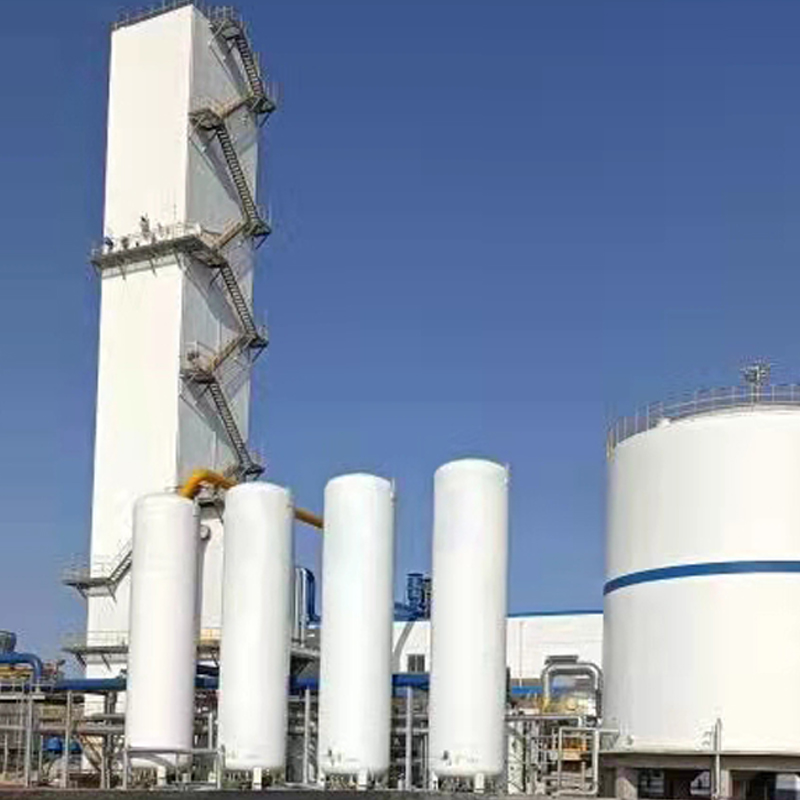
Wherein, A Commercial Liquid Nitrogen Plant applies advanced refrigeration technology for attaining these temperatures.
l Liquid Nitrogen Plant
l Cryogenic Air Separation Plant
Some major properties of liquid nitrogen
|
Property |
Value |
|
Chemical Formula |
N₂ |
|
Boiling Temperature |
-196°C |
|
Freezing Temperature |
-210°C |
|
Density |
About 808 kg/m³ |
|
Appearance |
Colorless liquid |
|
Odor |
Odorless |
Nitrogen is also chemically stable, making it useful in many industrial applications.
Liquid Nitrogen Plants are able to manufacture LN2 using cryogenic technology.
And hence this brings together workshops in three layers of production process.
6.1 Air Compression
The system compresses atmospheric air.
The air compressor raises ambient air pressure for further processing.
6.2 Air Purification
The purification system removes:
l Water vapor
l Carbon dioxide
l Oil
l Other impurities
This step protects cryogenic equipment.
6.3 Cryogenic Cooling
It cools the air below using heat exchange.
On the other hand, refrigeration equipment produces cryogenic temperatures.
6.4 Nitrogen Separation
Cryogenic separation — A cryogenic separation unit separates nitrogen from oxygen and other gases.
6.5 Nitrogen Liquefaction
The nitrogen temperature halves to about -196°C.
This transformation helps nitrogen to turn into liquid.
Many industrial opportunities created by the extremely low Liquid Nitrogen Temperature
7.1 Food Processing
Liquid nitrogen enables rapid freezing.
Advantages include:
l Better food quality
l Shorter freezing time
l Reduced ice crystal formation
7.2 Medical Industry
LN2 is utilized by: Hospitals Laboratory
l Biological sample storage
l Cell preservation
l Cryogenic research
7.3 Pharmaceutical Industry
Liquid nitrogen supports:
l Temperature-controlled storage
l Drug research
l Biological material preservation
7.4 Electronics Manufacturing
LN2 provides precision cooling for:
l Semiconductor production
l Electronic testing
l Material research
7.5 Scientific Research
Liquid nitrogen is also used in cryogenic experiments at research institutions.
Cryogenic nitrogen system consists of the following components:
Liquid Nitrogen Production Equipment
Main equipment includes:
l Air compressor
l Purification system
l Heat exchanger
l Expansion turbine
l Cryogenic separation unit
l Control system
Air Separation Unit
Cryogenic Air Separation Equipment
Liquid Nitrogen Storage Equipment
Storage systems include:
l Cryogenic storage tanks
l Vacuum insulated vessels
l Transfer pipelines
Good insulation allows us to maintain the temperature of liquid nitrogen
Cryogenic storage solutions:
https://bangwingascylinder.com/
Continuous temperature stabilization depends strongly on the system design.
Important factors include:
9.1 Storage Insulation
Vacuum insulation of high quality inhibits the transfer of heat.
Therefore, nitrogen evaporation decreases.
9.2 Equipment Efficiency
Cooling performance is improved by the use of efficient heat exchangers.
9.3 Operating Pressure
Boiling temperature of nitrogen is impacted by pressure changes.
Therefore, pressure control is important.
9.4 System Maintenance
Routine checks help in achieving stable cryogenics.
Nanjing Bangwin Gas is a professional industrial gas equipment and cryogenic solutions provider.
Official Website:
The company supplies:
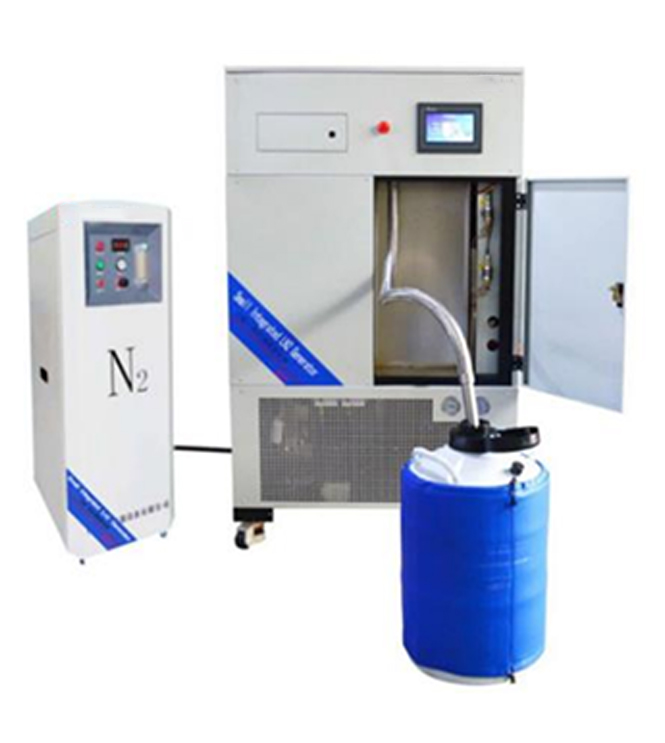
l Compact Liquid Nitrogen Plant
l Cryogenic Air Separation Plant
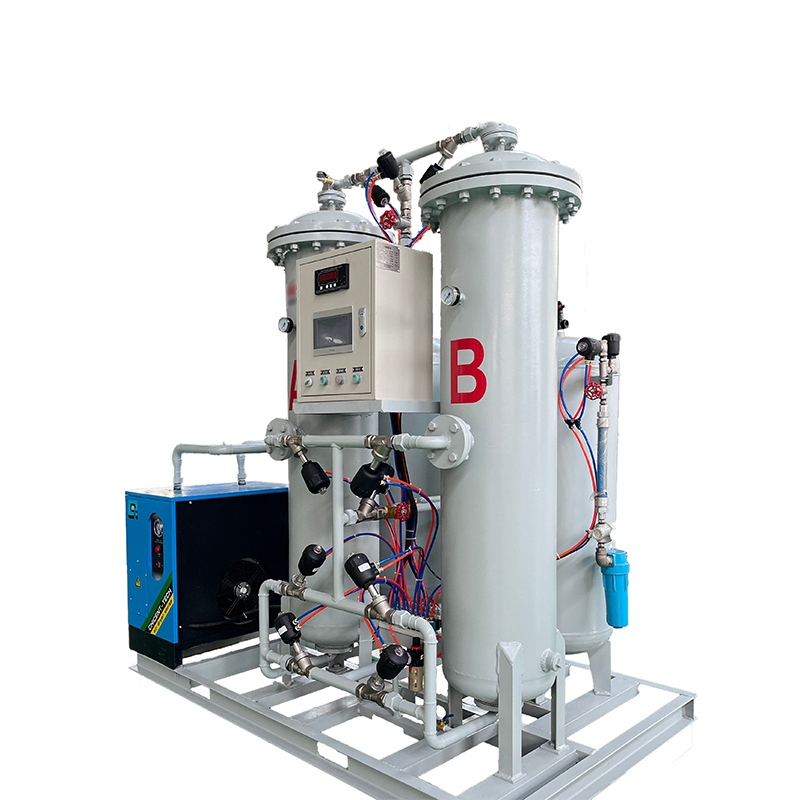
Nanjing Bangwin Gas focuses on:
l Customized cryogenic solutions
l Efficient nitrogen production systems
l Reliable equipment design
l Professional technical support
Hence customers could obtain a very stable liquid nitrogen production and storage.
1. What is the temperature of liquid nitrogen?
Liquid nitrogen temperature is approximately -196°C (-321°F) at atmospheric pressure.
2. What is the freezing point of nitrogen?
Nitrogen freezes at approximately -210°C (-346°F).
3. Why is liquid nitrogen used for cooling?
Liquid nitrogen absorbs large amounts of heat during evaporation, which provides strong cooling performance.
4. Can liquid nitrogen temperature be lower than -196°C?
Yes. Under different pressure conditions, nitrogen can reach lower temperatures.
5. How is liquid nitrogen produced?
Industrial plants produce liquid nitrogen through air separation and cryogenic liquefaction processes.
6. What equipment produces liquid nitrogen?
Liquid Nitrogen Plants, Nitrogen Liquefaction Plants, and Cryogenic Air Separation Plants can produce liquid nitrogen.
It has a Liquid Nitrogen Temperature of about −196°C which is one of the main Cryogenic Infrastructures in the world.
With its exceptional cooling function, it is an advantage for various industries, including healthcare, food production, electronics manufacturing and pharmaceuticals as well as scientific endeavour.
Liquid nitrogen production and storage happens best when outfitted with cryogenic equipment from trusted brands and sufficient expertise in handling engineering support.
Nanjing Bangwin Gas has an exclusive supply of high-performance liquid nitrogen plants, nitrogen liquefaction systems and full set industrial gas solutions.
Check out here, to discover professional liquid nitrogen generation equipment.



 IPv6 réseau pris en charge